Maryland insulation services

Insulation Services That Make Your Home More Comfortable Year-Round.

Proper insulation is one of the most effective ways to improve comfort and reduce wasted energy. EcoPower Solutions provides professional insulation inspection, installation, supplemental insulation, and replacement services for attics, walls, basements, crawlspaces, knee walls, rim joists, and other problem areas throughout Maryland.

We inspect what is already in your home, identify insulation that is missing, thin, settled, damaged, compressed, contaminated, or poorly installed, and recommend whether it should be added to, repaired, or replaced. Many older Maryland homes—especially homes built before 2013—may have insulation levels that fall short of today’s energy-code expectations because insulation and energy-efficiency requirements have changed over time.

Eligible homeowners may also qualify for BGE Home Performance rebates and incentives that can help reduce the cost of insulation and air-sealing improvements.

Inspect existing insulation Add insulation where needed Replace damaged material
Why insulation matters

Insulation protects your home—and it needs to be complete, dry, and properly installed.

In winter, heat naturally moves toward colder areas and can escape through attics, walls, floors, foundations, and other weak points. In summer, outdoor heat moves into the home. Proper insulation slows that heat movement and helps indoor temperatures stay more stable.

Insulation can also lose effectiveness over time. It may settle, compress, become wet, be disturbed during repairs, suffer pest damage, or simply be too thin for the home’s current needs.

EcoPower can evaluate existing insulation throughout the home and determine whether the right solution is to keep it, add more, correct installation problems, or remove and replace damaged material.

Many homes built before 2013 were constructed under older insulation and energy-efficiency requirements. Even when the original insulation was acceptable at the time, the home may not have the insulation levels or air-sealing performance expected under newer standards.

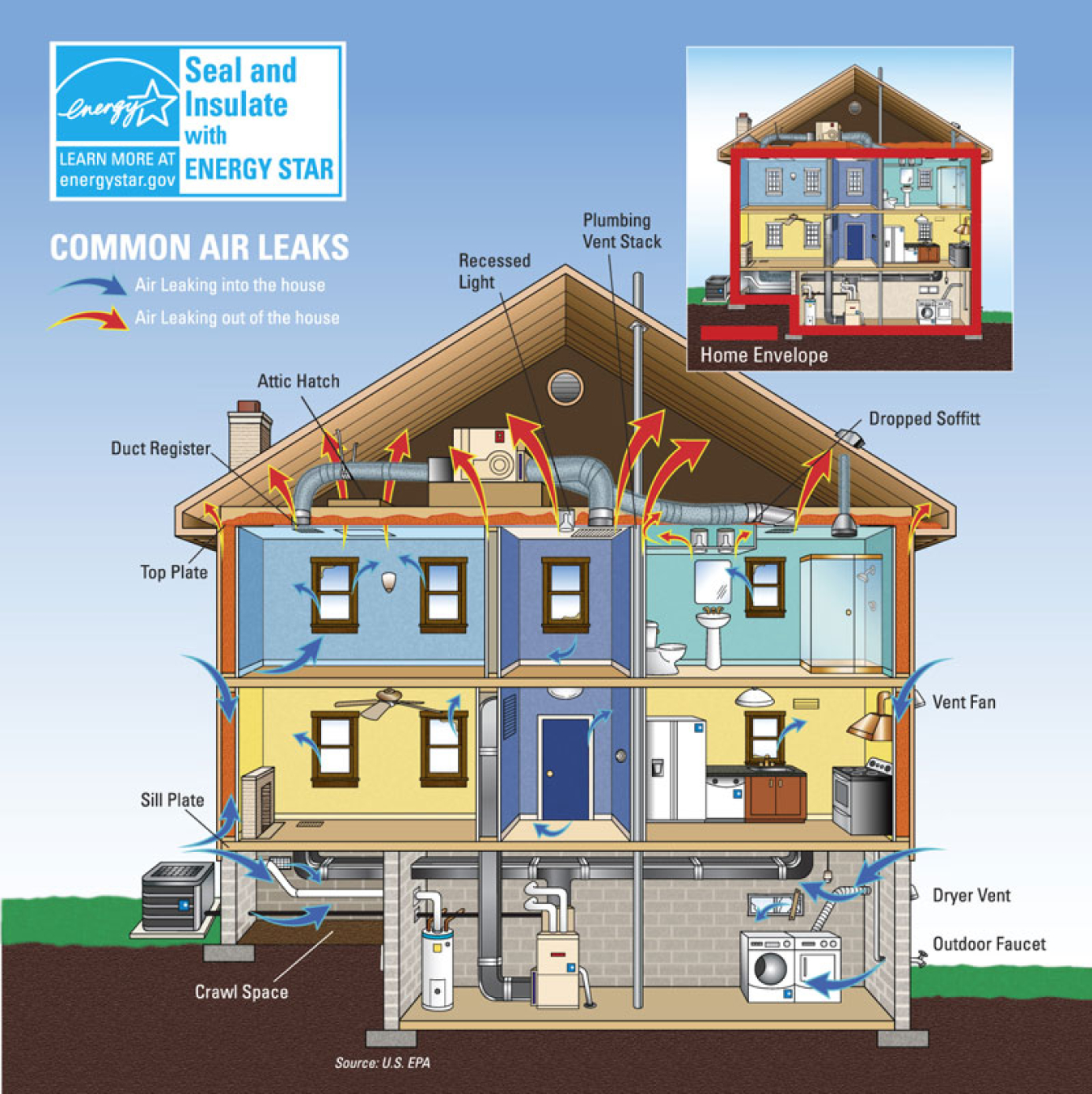
Department of Energy diagram showing common air leaks around a home
Common air leaks can occur around attics, walls, windows, doors, plumbing, wiring, and foundations. Graphic: U.S. Department of Energy .
More even comfort Proper insulation helps reduce hot rooms, cold rooms, and large temperature differences between floors.
Less HVAC work Better insulation can reduce how hard your heating and cooling system has to work.
Insulation services and materials

Insulation materials we inspect, add, install, and replace.

The right insulation depends on where it is being installed, what is already there, moisture conditions, access, air leakage, and the R-value the home needs. EcoPower can evaluate existing insulation and determine whether it should remain in place, be supplemented, corrected, or replaced.

Close-up of loose-fill fiberglass insulation

Blown-In Fiberglass

Loose glass fibers can be blown across attic floors and other open areas. EcoPower can inspect existing fiberglass, add material where levels are low, or replace material that has become wet, contaminated, disturbed, or ineffective.

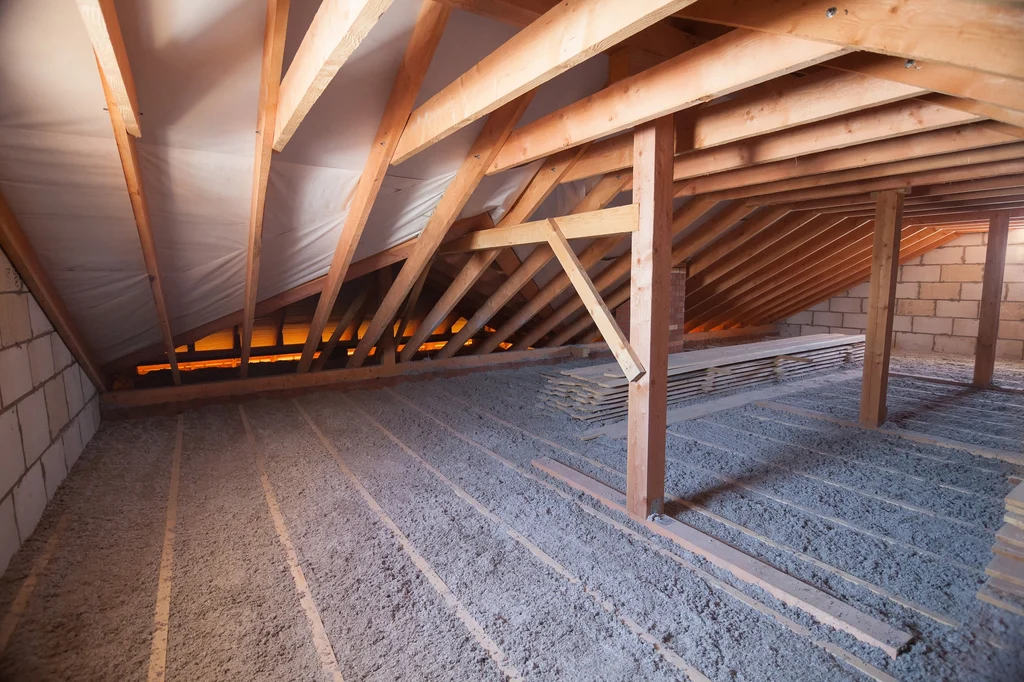
Blown-in cellulose insulation covering an attic floor

Blown-In Cellulose

Cellulose is commonly used in attics and wall cavities and can conform well around framing and irregular spaces. We can evaluate existing cellulose, add additional depth, install new material, or remove and replace damaged insulation when appropriate.

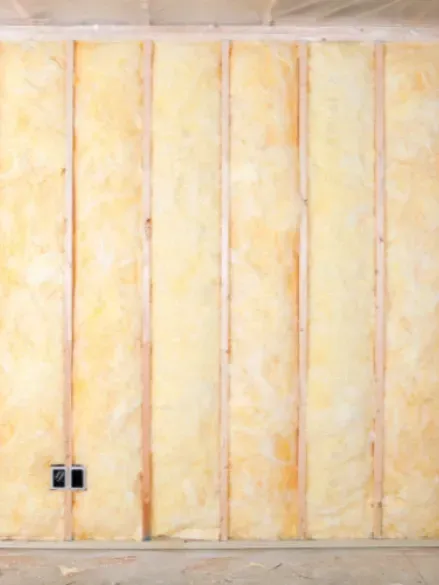
Fiberglass batt insulation fitted between wall studs

Fiberglass Batts

Batts are installed between wall, floor, and ceiling framing. Their performance depends heavily on fit and installation quality. EcoPower can identify gaps, compression, missing sections, or damaged batts and recommend correction or replacement.

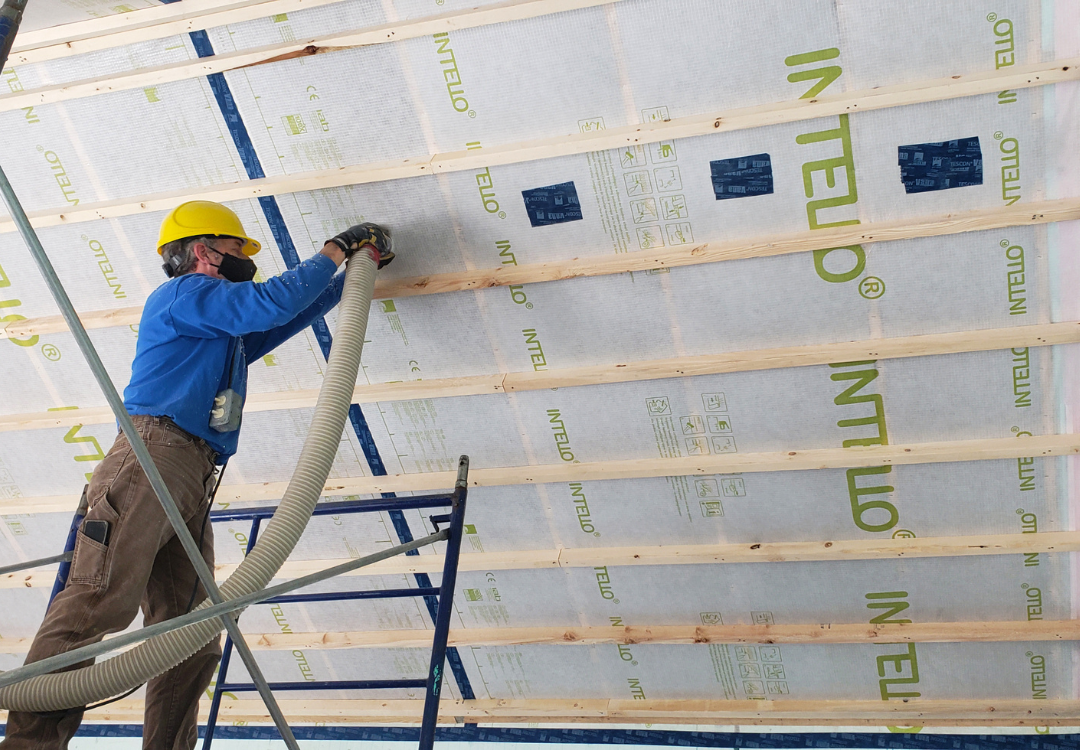
Cellulose insulation used for blown-in and dense-pack applications

Dense-Pack Insulation

Dense-pack insulation is blown under pressure into enclosed wall, floor, and ceiling cavities. It can be especially useful in older Maryland homes with little or no wall insulation because it can often be installed through small access holes without removing large areas of drywall or plaster.

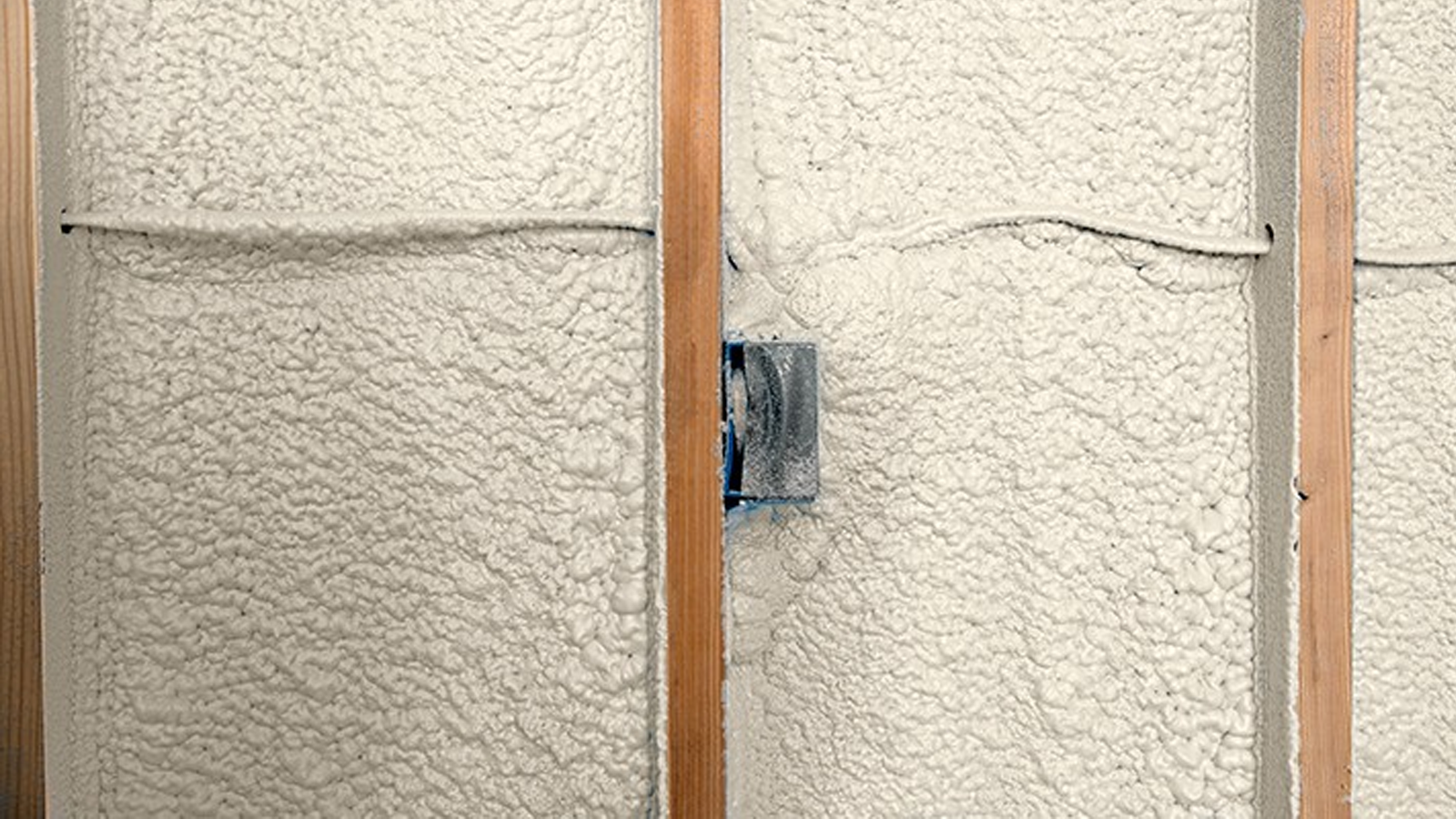
Spray foam insulation installed in open wall cavities

Spray Foam

Spray foam can provide both insulation and air control in appropriate applications. EcoPower can assess where foam may be useful and whether existing foam is properly installed and performing as intended.

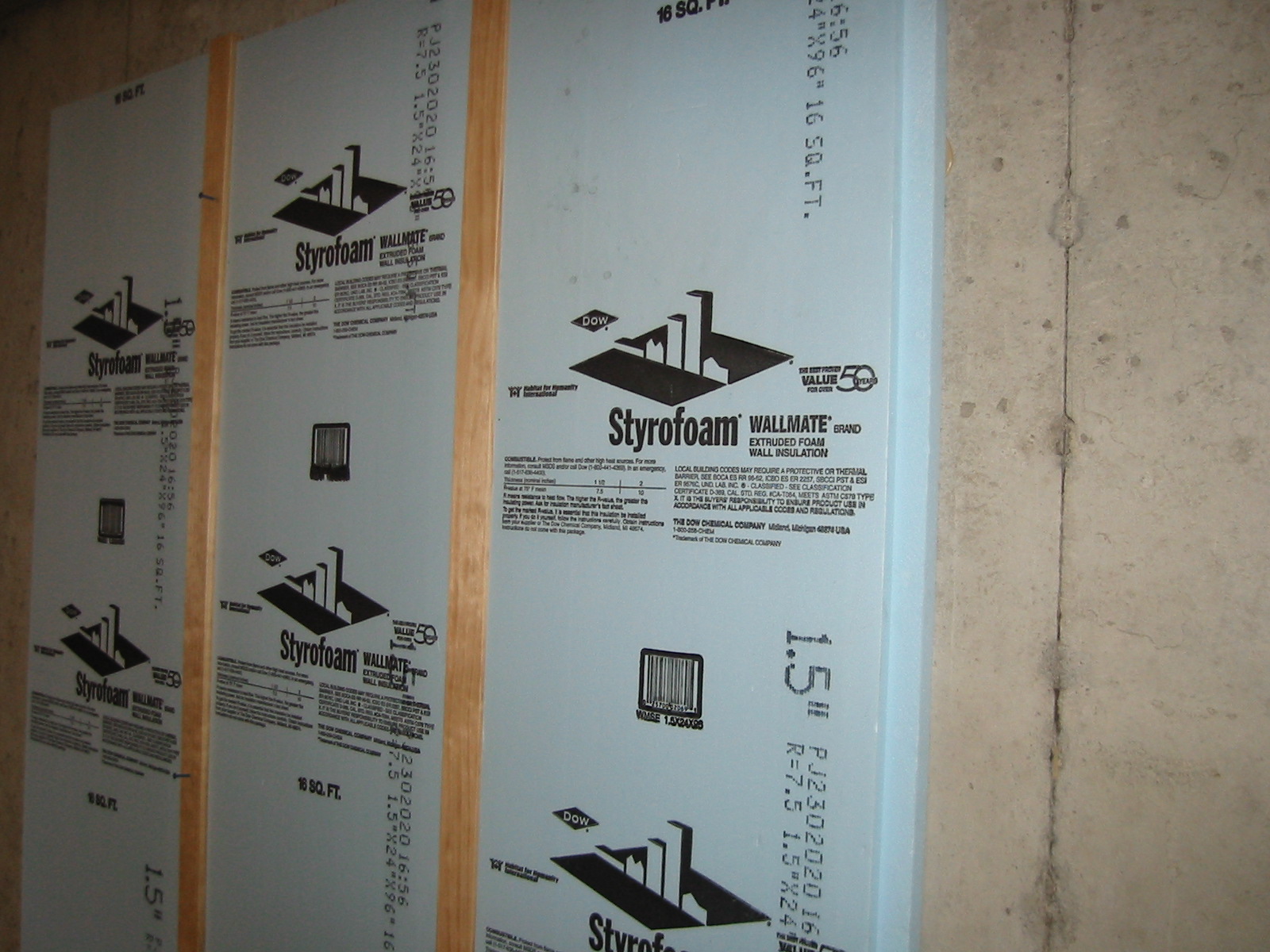
Rigid foam board insulation installed on a basement wall

Rigid Foam Board

Rigid insulation panels can be used in basements, foundations, rim joists, walls, and other specialty applications. We evaluate the assembly and determine whether foam board is appropriate for the specific area.

Attic air sealing and insulation preparation
Warning signs

Signs it may be time to inspect, add, or replace insulation.

Insulation does not have to be completely missing to cause problems. Material can settle, become compressed, get wet, be disturbed by contractors or pests, or simply be too thin to provide the performance your home needs.

EcoPower can inspect these areas and determine whether additional insulation, removal and replacement, air sealing, or another corrective measure is appropriate.

Hot or cold rooms

Upstairs rooms, additions, rooms over garages, and finished attic spaces may feel noticeably different when insulation is missing or uneven.

Cold walls or floors

Cold surfaces and large temperature changes between floors may point to under-insulated walls, floors, rim joists, basements, or crawlspaces.

Heating or cooling runs often

Your HVAC system may have to run longer because heat is entering or leaving the home too quickly.

Insulation looks thin or damaged

Gaps, low depth, compression, water stains, contamination, or pest damage can all reduce insulation performance and may require adding material or replacement.

Risks of poor insulation

Poor or damaged insulation can lead to bigger home problems.

Missing, thin, wet, compressed, or damaged insulation can affect comfort, energy use, moisture conditions, and how hard your heating and cooling system has to work.

Problems to take seriously

  • Rooms that stay too hot or too cold.
  • Higher heating and cooling costs.
  • Extra wear on your HVAC system.
  • Condensation when warm, damp air reaches cold surfaces.
  • Roof ice dams influenced by excess heat escaping into the attic.
  • Wet insulation, odors, pest contamination, and damage to nearby materials.
Have Your Insulation Checked
Where we inspect and improve insulation

Insulation should form a continuous thermal boundary around the living areas of your home.

EcoPower can inspect the major areas of the home where missing, insufficient, or damaged insulation commonly affects comfort and efficiency.

Attics and rooflines

We inspect insulation depth, coverage, air leakage, damaged material, access areas, and other attic conditions that may reduce performance.

Exterior walls

Older wall cavities may have little insulation, settled material, or missing sections. Dense-pack and other approaches may be available depending on the home.

Floors and foundations

Basements, crawlspaces, rim joists, and floors over garages are common areas for missing insulation, drafts, and cold-floor complaints.

Knee walls and attic rooms

Finished attic spaces often have complicated insulation boundaries. We can identify gaps, missing coverage, and areas that need correction.

Insulation basics

Common homeowner questions.

What is R-value?

R-value measures resistance to heat flow. A higher R-value generally means greater insulating ability. However, actual performance also depends on correct installation, complete coverage, air sealing, and keeping the insulation dry and undisturbed.

ENERGY STAR insulation R-value recommendations by United States climate zone
Recommended insulation levels vary by climate area and by where the insulation is installed. Graphic: ENERGY STAR .
Why should air leaks be sealed before adding insulation?

Insulation slows heat movement, while air sealing blocks uncontrolled airflow through cracks and openings. Sealing major leaks before adding insulation helps the finished insulation system perform better.

Can new insulation be added over existing insulation?

Often, yes. Existing insulation should first be checked for moisture, pests, contamination, compression, air-leakage paths, and other problems. If the existing material is clean and suitable, additional insulation can often be installed over it.

When should insulation be removed and replaced?

Replacement may be appropriate when insulation has been heavily damaged by water, pests, contamination, construction work, or other conditions that make it impractical or unsafe to leave in place. EcoPower can inspect the area and recommend whether removal is actually necessary.

Are older homes usually under-insulated?

Many older homes have less insulation than would typically be expected in a newer energy-efficient home. Building and energy codes have changed over time, and insulation may also settle, be disturbed, become damaged, or have been installed inconsistently. Homes built before 2013 are especially worth evaluating if the insulation has never been upgraded.

Does insulation stop drafts?

Not by itself. Drafts are caused by air movement through cracks, gaps, and penetrations. Air sealing and insulation often work best as a coordinated improvement.

Not sure whether your insulation is adequate?

EcoPower can inspect the insulation already in your home, identify missing or underperforming areas, and recommend whether it should be added to, corrected, or replaced. This is especially worthwhile in older Maryland homes where insulation levels may predate newer energy-code requirements.

Request an Insulation Assessment